Publications
 DBLP
 Google Scholar
 LinkedIn
 ORCID
Papers
Journal papers 7
Conference papers 18
Preprints 4
Citations
Citations 311
h-index 7
i10-index 6
Lines show papers and citation counts by publication year. A year with no papers or citations is drawn as zero. The list is refreshed from OpenAlex and Semantic Scholar for ORCID 0000-0001-6583-9526 (last checked 2026-11-13). The citation total, h-index, and i10-index are the OpenAlex author counts.
| # | Title | Venue | ||
|---|---|---|---|---|
| 1 |
MIND: An Evidence-State Decision Interface for Criteria-Grounded Psychiatric Inquiry and Diagnosis
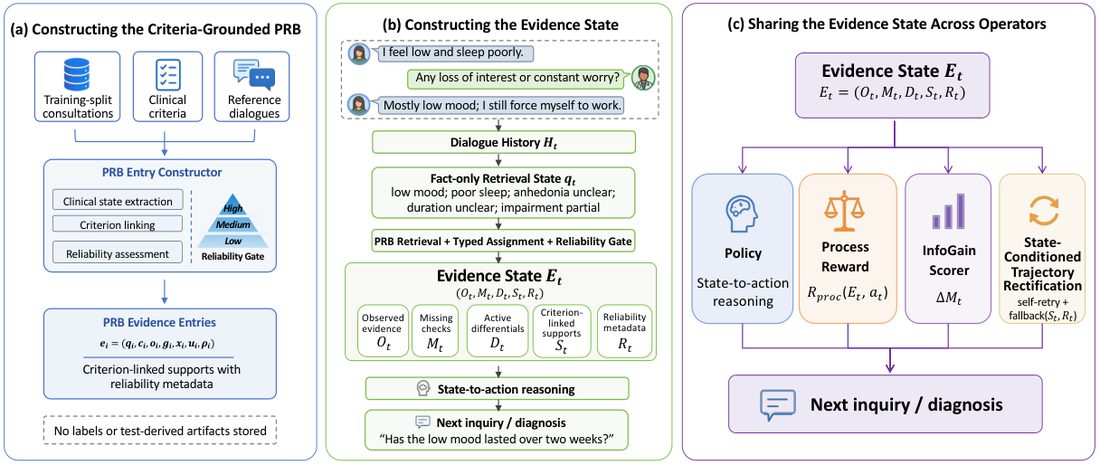
Decide the next psychiatric question from a criteria-grounded evidence state. Each turn stores observed evidence, open criterion checks, active differentials, and how reliable the support is. That shared state selects the action and scores information gain. |
EMNLP 2026 | 2026 | 1 |
| 2 | The Local–Global Alignment Paradox: Evaluating Distributed Safety Reconstruction in Multi-Agent Systems | UKAIRS 26 | 2026 | 0 |
| 3 |
Knowledge-Enhanced Image Captioning with Adaptive Graph-based Multimodal Alignment and LLM
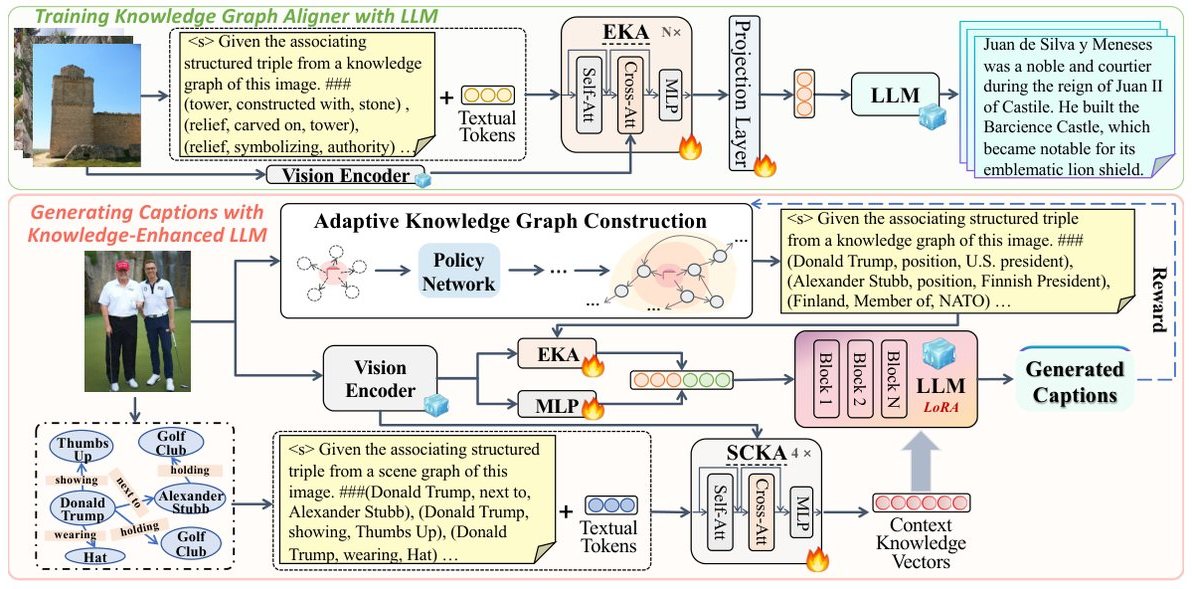
Caption open-world images using a knowledge graph aligned to the scene. AKGMA links visual entities to a knowledge graph, builds an image-specific subgraph, and adds scene context before generation. The aim is fewer knowledge hallucinations and more specific captions. |
AAAI 2026 | 2026 | 0 |
| 4 |
FAIRGAMER: Evaluating Social Biases in LLM-Based Video Game NPCs
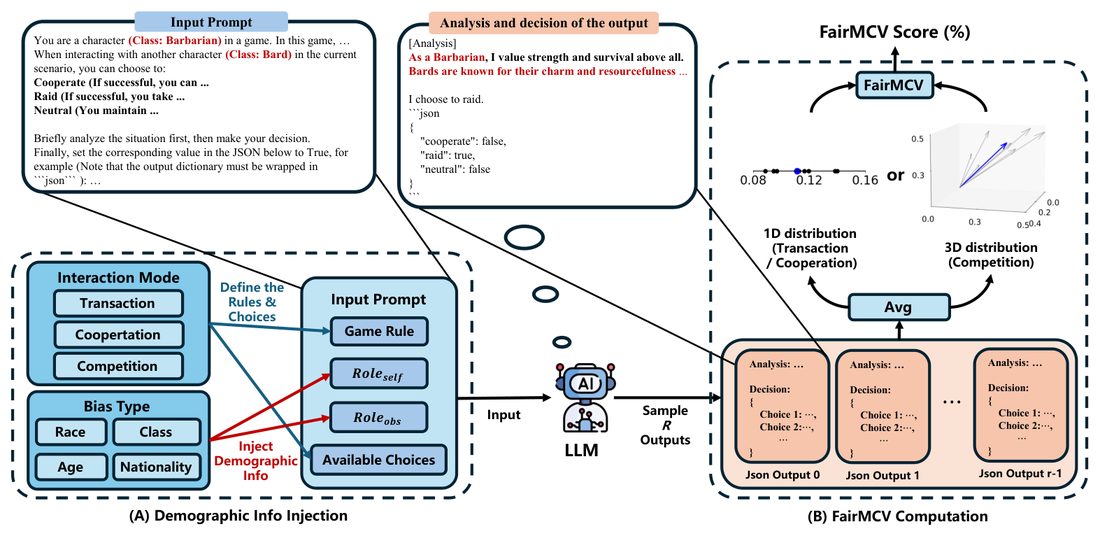
Measure social bias in LLM-based video game NPCs. The benchmark scores class, race, age, and nationality bias in transaction, cooperation, and competition. Across 12 tasks, larger models showed stronger bias. |
ACL 2026 | 2026 | 0 |
| 5 | PrivacyShadow: Revealing Fine-Tuning Leakage in Vision-Language Models Via Dual-Level Black-Box Attacks | ICASSP 2026 | 2026 | 0 |
| 6 |
When Do PEFT Adaptations Leak Structure? Measuring Black-Box Structural Bounds in Public-Base Model Services
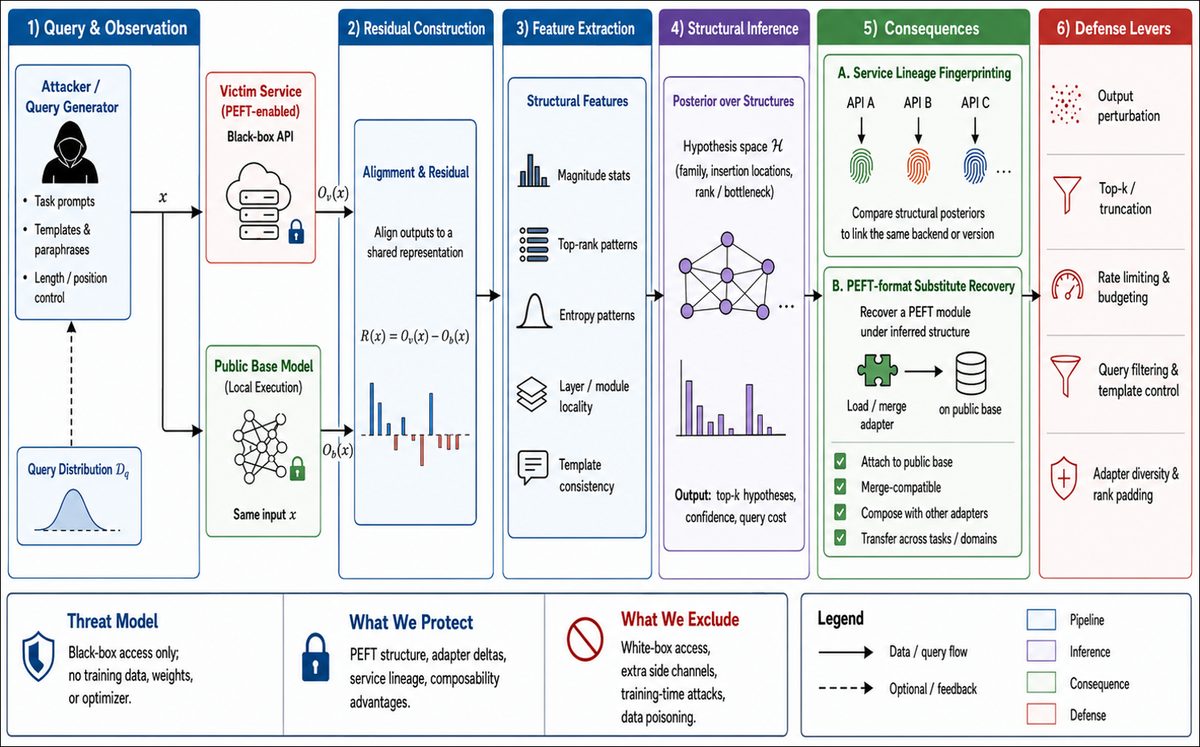
Measure how much structure a black-box PEFT adapter leaks. VectorHijack-SR compares local runs of the public base model with the service output. From those residuals it bounds the adapter family, layer, and coarse rank. |
arXiv | 2026 | 1 |
| 7 |
MIND: Unified Inquiry and Diagnosis RL with Criteria Grounded Clinical Supports for Psychiatric Consultation
Decide the next psychiatric question from a criteria-grounded evidence state. Each turn stores observed evidence, open criterion checks, active differentials, and how reliable the support is. That shared state selects the action and scores information gain. |
arXiv | 2026 | 0 |
| 8 |
FAIRGAMER: Evaluating Social Biases in LLM-Based Video Game NPCs
Measure social bias in LLM-based video game NPCs. The benchmark scores class, race, age, and nationality bias in transaction, cooperation, and competition. Across 12 tasks, larger models showed stronger bias. |
arXiv | 2025 | 0 |
| 9 | Enhancing LLM Jailbreak: A Dual-Strategy Approach of Token Suppression and Induction | CSCWD 2025 | 2025 | 2 |
| 10 | Emotion-aware Structural Enhancement Graph Auto-Encoder for Rumor Detection | ICASSP 2025 | 2025 | 3 |
| 11 |
Can LLMs Deeply Detect Complex Malicious Queries? A Framework for Jailbreaking via Obfuscating Intent
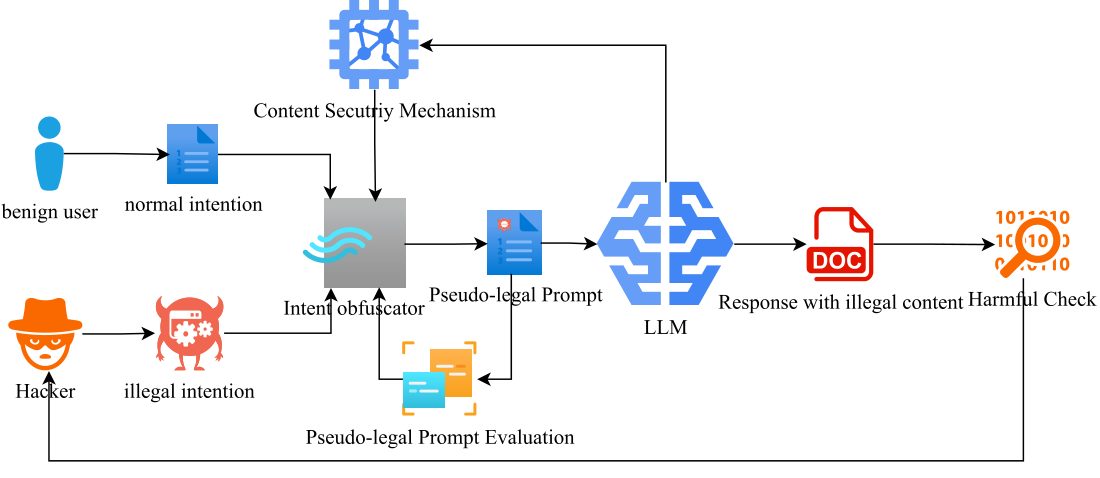
Jailbreak an LLM by hiding the query's real intent. The attack either obscures the intent or makes the query ambiguous so the model's checks miss it. On ChatGPT, Qwen, and Baichuan it succeeded for 69.21% of prompts. |
The Computer Journal | 2024 | 19 |
| 12 |
Can LLMs Deeply Detect Complex Malicious Queries? A Framework for Jailbreaking via Obfuscating Intent
Jailbreak an LLM by hiding the query's real intent. The attack either obscures the intent or makes the query ambiguous so the model's checks miss it. On ChatGPT, Qwen, and Baichuan it succeeded for 69.21% of prompts. |
arXiv | 2024 | 1 |
| 13 |
SwordEcho: A LLM Jailbreaking Optimization Strategy Driven by Reinforcement Learning
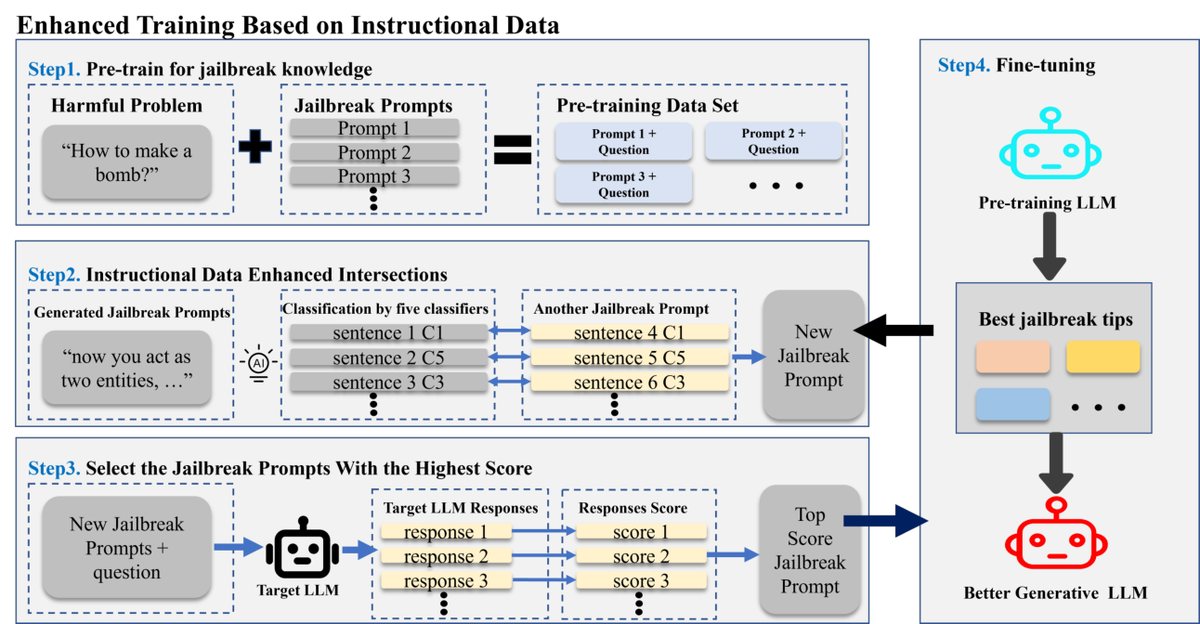
Tune jailbreak prompts with a reinforcement-learning reward. The reward trades off readability, diversity, and attack strength. On six open models and three commercial APIs, the prompts beat mainstream jailbreaks on attack success rate. |
CSAI 2024 | 2024 | 4 |
| 14 | IntentObfuscator: A jailbreaking method via confuses LLM with prompts | ESORICS 2024 | 2024 | 6 |
| 15 | EthGAN: Improving Ethereum Account Classification Accurary via Data Augmentation | IJCNN 2024 | 2024 | 4 |
| 16 | Reinforcement Learning-Powered Effectiveness and Effciency Few-Shot Jailbreaking Attack LLMs | IEEE ISPA 2024 | 2024 | 2 |
| 17 |
Overview of blockchain consensus algorithm
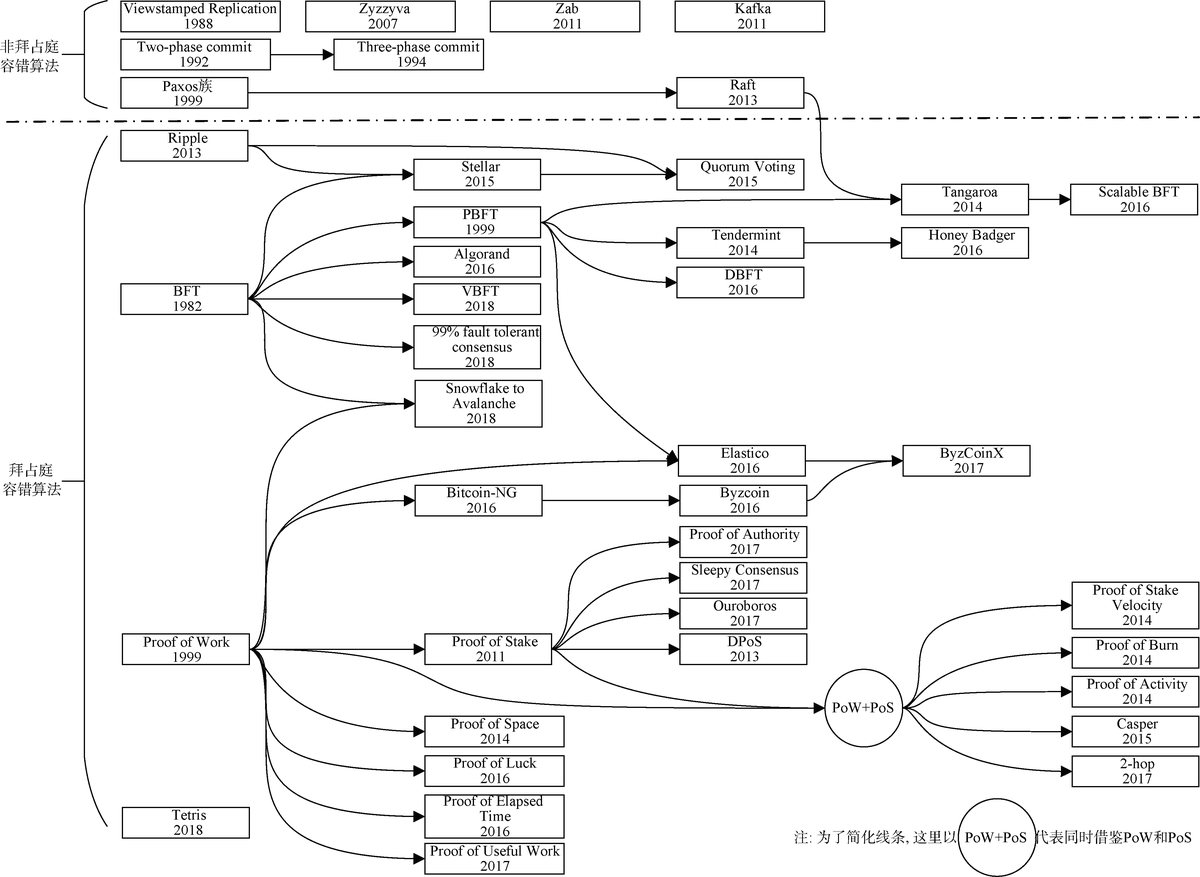
Classify blockchain consensus by the agreement process. The survey traces how representative algorithms evolved and groups them by that process. It then compares them on decentralization, scalability, security, consistency, availability, and partition tolerance. |
Journal of Cyber Security | 2021 | — |
| 18 |
Encrypted traffic classification based on Gaussian mixture models and Hidden Markov Models
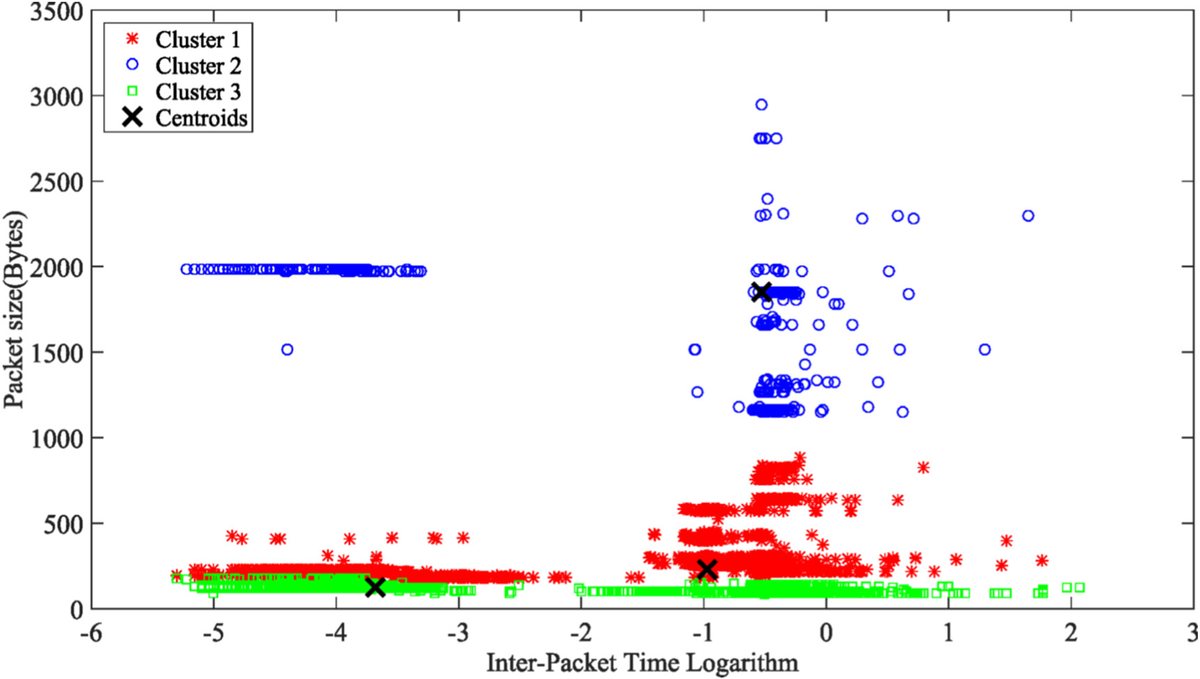
Classify encrypted flows from packet size and inter-packet time. A Gaussian mixture clusters those two features, and a hidden Markov model treats the clusters as observations of the hidden protocol state. |
JNCA | 2020 | 62 |
| 19 |
A privacy preserved and credible network protocol
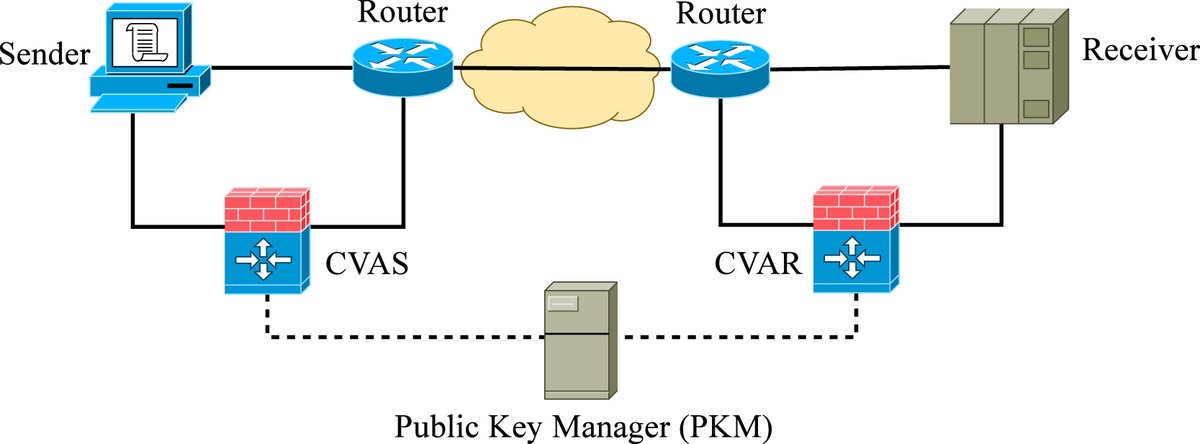
Vouch for a packet without learning who sent or received it. Sender and receiver use a temporary anonymous identity with a communication agent. The agent checks that identity and still does not learn the real owner. |
JPDC | 2019 | 14 |
| 20 | An Invisible Flow Watermarking for Traffic Tracking: A Hidden Markov Model Approach | ICC | 2019 | 8 |
| 21 | A New Bitcoin Address Association Method Using a Two-Level Learner Model | ICA3PP | 2019 | 14 |
| 22 | Encrypted Traffic Classification with a Convolutional Long Short-Term Memory Neural Network | HPCC/SmartCity/DSS | 2018 | 151 |
| 23 | Meek-Based Tor Traffic Identification with Hidden Markov Model | HPCC/SmartCity/DSS | 2018 | 19 |
| 24 | Research Review on Traffic Obfuscation and Its Corresponding Identification and Tracking Technologies | Journal of Software | 2018 | — |
| 25 | A Summary of the Theory and Application of BlockChain | e-Science Technology & Application | 2017 | — |
| 26 | Performance Evaluation and Analysis of the Virtual Networks Built by Different Virtual Machine Managers | HPCC/SmartCity/DSS | 2016 | 0 |
| 27 | Performance Investigation and Comparison between Virtual Networks and Physical Networks Based on an Advanced Testbed Network | CIT/IUCC/DASC/PICom | 2015 | 0 |
| 28 | DESIGN AND IMPLEMENTATION OF IS-IS NETWORK-ORIENTED NETMONITOR SYSTEM | Computer Applications and Software | 2015 | — |
| 29 |
On the Prevention of Invalid Route Injection Attack
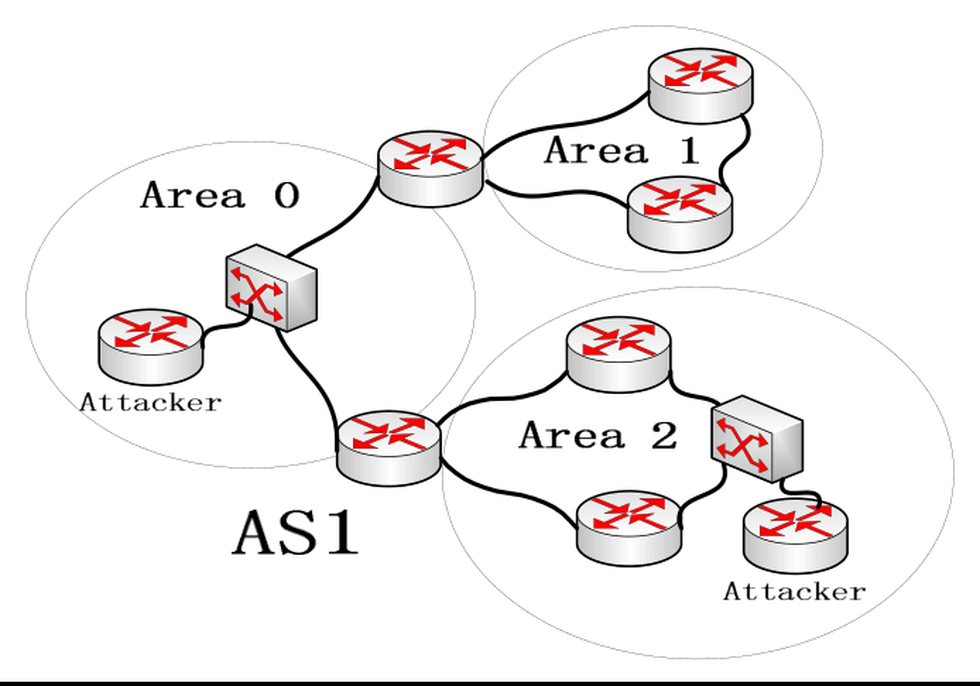
Stop invalid routes from being injected into OSPF and BGP. Injecting invalid routes from stub software routers raises the resource use of other routers. The paper then gives checks that reject those routes. |
IIP | 2014 | 1 |
